

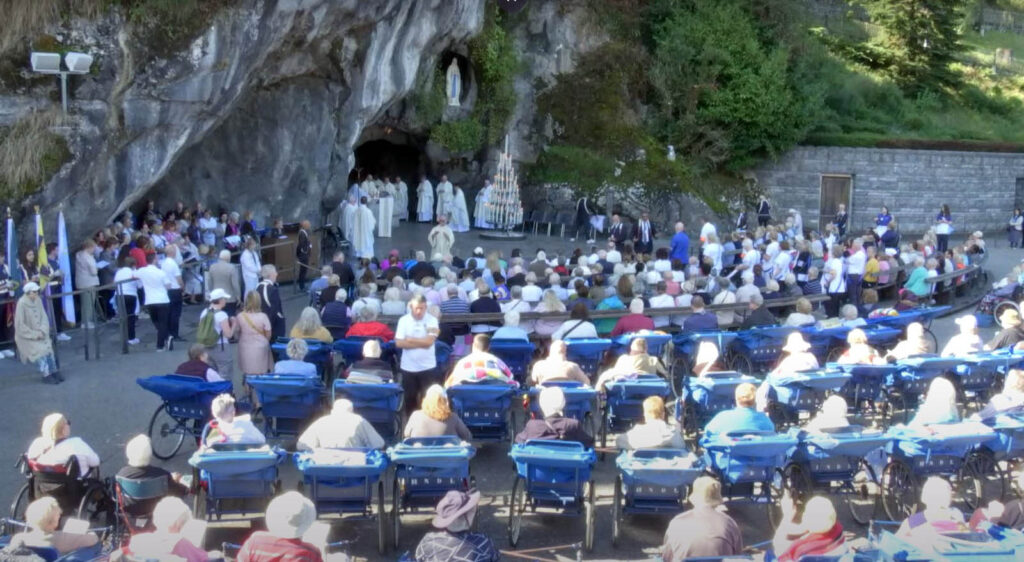

Mass for the Opening of the Dublin Diocesan Pilgrimage at the Grotto of Lourdes
Friday, September 5, 2025
Homily of Archbishop Dermot Farrell
To Come in Pilgrimage – an Act of Hope
To come to Lourdes on pilgrimage is an act of hope! We mightn’t express it like that to our friends, or even see it that way ourselves, but beneath the surface, in its deeper reality, it is hope that brings us here. Yes, our faith brings us here, and charity and the service it entails bring us here, but most of all, to come on pilgrimage to Lourdes is to put flesh on hope. To come to Lourdes is to live out our hope.
No two journeys to this place are the same. Some come for healing, some for peace, some in thanksgiving for a prayer answered. Maybe you have come to Lourdes because someone has asked you, and you’re finding it all a bit different. But we’re all here together for these days, thrown together by circumstances, as it were. Perhaps we can enter into one of the fundamental aspects of all pilgrimage: that of leaving “the ordinary and everyday” behind, and embrace this place in which the Kingdom of God draws particularly near (see Luke 10:8–9).
On the Third Day
The Gospel we have just heard (John 2:1–11), this famous story of Jesus at the wedding in Cana, is not only well known to us, but begins in a very interesting and important way. St John begins this story with the words, “On the third day…” (2:1) He begins this story of hope, with some of Christianity’s most hope-filled words: “on the third day.” These words resonate with us, as it is on the third day, that Jesus rises from the dead: as we pray in the Creed week after week, “on the third day he rose again in accordance with the Scriptures.” This is our hope. This is the foundation of our faith, our true liberation.
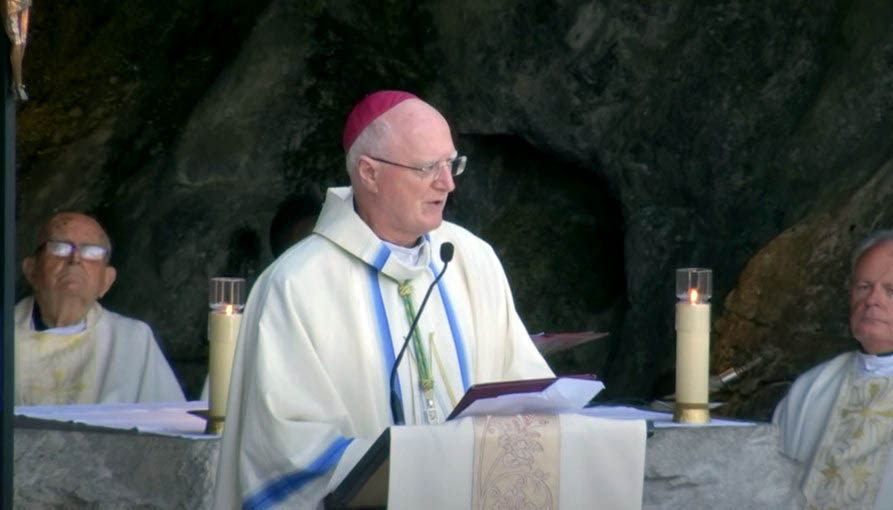
John Paints the Resurrection for Us
“On the third day there was a wedding at Cana in Galilee.” St John is telling us what happens on the Third Day. The evangelist is showing us what life in the resurrection is like. When I look at what happens in this story of resurrection, there are many things that strike me. Here are three that resonated with me, and that we might keep before us at the opening of our pilgrimage.
First, I was struck by the wine running out (2:3). One gains a sense of the embarrassment and the shame, something that would be mentioned – whispered – in Cana for years. I was struck by Mary’s concern, her compassion. She was determined that this day would not be ruined for her neighbours, and that they would keep their good name. It is in that spirit of generosity and service that she acts.
The second thing that strikes me is that Mary is instrumental in how things turn out. Yes, it is in Jesus that God’s power resides, but it is Mary’s hope and confidence in him, that brings him to act. Hers is a key role, and it is born of her hope in her Son. To live the resurrection, to live in “the third day,” is to be a someone who acts with hope in Jesus, and with hope in what God is doing in him. Mary’s confident plea is also a reminder to us of the power of intercession, and of its character. Prayer of intercession is less about cajoling the Lord to do something, and much more about putting someone before the Lord, about placing them in the Lord’s hands. To intercede for someone is not to hand them over to God, and then walk away. No! To intercede for someone is to place them in the Lord’s hands, and then to act. Mary’s “they-have-no-wine” (2:3) is followed by her “do-whatever-he-tells you.” (2:5) As Pope Francis put it, “A prayer that does not lead us to practical action for our sisters and brothers – the poor, the sick, those in need of help, the person in trouble – is a sterile and incomplete prayer.” (Angelus, July 21, 2013)
The third thing that strikes me is the surprise of the good wine, and how it comes at the end of the story. The best things in life are not always apparent. What truly matters, what is truly valuable, is not always obvious. Life takes time. God’s ways are not our ways. Importantly, it is not the steward who really sees this but the servants. Here in Lourdes, this place of service, that slice of John’s story might not be lost on us.
Today is the Third Day
Today is “the third day.” “Today is the day of salvation.” (see 2 Cor 6:2, citing Isa 49:8). The mystery of Cana, and all its compassion and its hope are here today. Cana is not just something that happened in the past. The compassion of Mary, the capacity of this older woman, not only to see her neighbours’ need, but to “mind her neighbours,” the wonder of the servants, the changing of the water into wine – all of that is here today. We have come to the altar of the Lord, to the sacred banquet, and the mother of Jesus is here! We are at Massabielle, on the banks of the Gave, the place where Mary, the Immaculate Conception, appeared, and where Mary, the mother of Jesus, and the Mother of Hope is still present. She is with us, praying with us, praying for us, calling us as she called her Son, to compassion, and to confidence in the power of God that is within us and among us.
May our pilgrimage to Mary’s shrine – this place of hope, give us a heart like Bernadette’s, open to the overture of the Mother of Jesus. May we have eyes to see when the wine is running out, may we have an eye for the needs of our neighbour, of the stranger, of the vulnerable, of the weak. May we have the hope of Mary in Jesus her Son, and the confidence of Bernadette in “the Lady,” as she called her. And may we be given the wisdom of the servants, who realise that a mystery has happened among them, that the Lord is at work beneath the surface of our lives, in hiddenness and faithfulness. May our common journey bring us closer to each other and to the Lord.
May this pilgrimage deepen our faith, strengthen our charity, and renew our hope.
Our Lady of Lourdes, Immaculate Conception: pray for us
Mary, Mother of the Church and Mother of Hope: pray for us.
St Bernadette: pray for us.
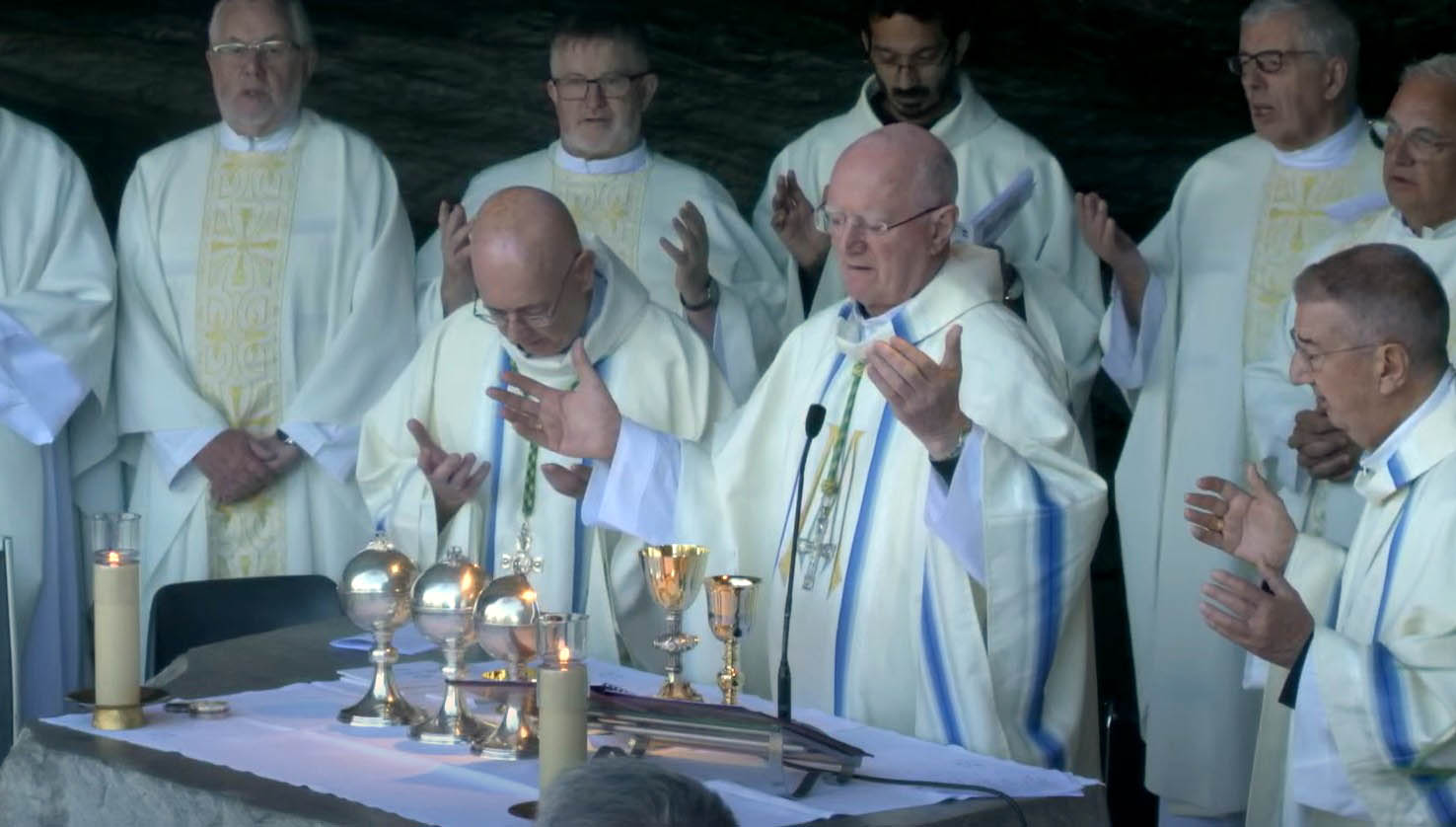
Gospel Text (John 2:1–11):
On the third day there was a wedding in Cana of Galilee, and the mother of Jesus was there. Jesus and his disciples had also been invited to the wedding.
When the wine gave out, the mother of Jesus said to him, “They have no wine.” And Jesus said to her, “Woman, what is that to you and to me? My hour has not yet come.”
His mother said to the servants, “Do whatever he tells you.”
Now standing there were six stone water jars for the Jewish rites of purification, each holding twenty or thirty gallons. Jesus said to them, “Fill the jars with water.” And they filled them up to the brim. He said to them, “Now draw some out, and take it to the chief steward.” So they took it.
When the steward tasted the water that had become wine, and did not know where it came from (though the servants who had drawn the water knew), the steward called the bridegroom, and said to him, “Everyone serves the good wine first, and then the inferior wine after the guests have become drunk. But you have kept the good wine until now.”
Jesus did this, the first of his signs, in Cana of Galilee, and revealed his glory; and his disciples believed in him.