


Mass of the Holy Spirit for the Opening of the Academic Year 2025-2026
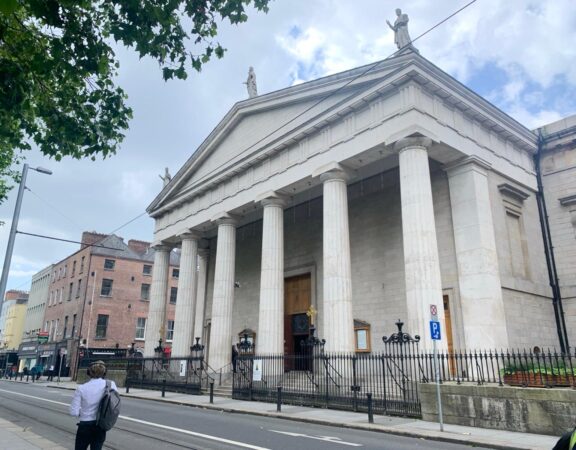
DCU St Patrick’s Campus
Tuesday, September 30, 2025
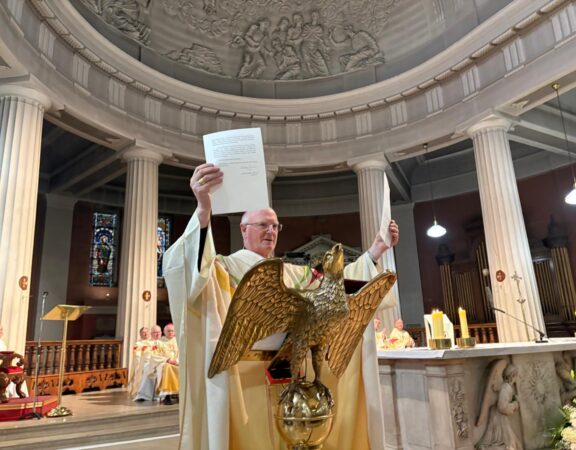
Homily Notes of Archbishop Dermot Farrell
We gather in this Jubilee Year of hope to pray God’s blessing on the academic year that has just begun.
We begin this year with a sense of hope. However, any meaningful conversation about hope must be anything but naive, superficial, or immediate. No discussion of hope is valid unless it also integrates and reflects its opposite: the experience of despair.
There is the profound difference between hope and optimism. The word hope fills the language of our lives: “we hope to be able to return to school after an illness,” “we hope to be able to make the meeting of the Board of Management.” This is the way we speak.
However, when our faith speaks of hope, we are saying more. True hope is always more than people can construct. Genuine, empowering hope is always a gift, a gift which everyone can receive.
In the Gospel, Jesus reads from the scroll of the prophet Isaiah and essentially sums up his mission: to announce the good news to the poor, to free the captives, to restore sight to the blind, to proclaim a year of favour from the Lord, and the most remarkable thing that Jesus says at the end of the Gospel: “This passage is being fulfilled today even as you listen.” The reaction of his hearers was swift. They try to hurl him from the cliffs because of his imprudence.
Hope can establish a future because it passes with open eyes through the heart of the present without escaping its crucifying dimension. In his ministry Jesus heals, forgives and suffers to show that suffering will not have the last word, but that love and life will have the last word. Jesus is God’s love incarnate. And through His spirit that love is to be incarnate and active in us.
How can be beacons of hope in our schools, colleges and educational institution? Surely we find true hope by practising hope.
First of all, education is, above all, an act of hope in those before us… in their possibilities to change and contribute to the renewal of society.” (Pope Francis, February 24, 2024) To educate, in fact, it is necessary to nurture hope in the person to be educated, who is the bearer of goodness and newness. The Catholic school must teach hope, offer an experience of integral humanity that helps to form a synthesis between the human and spiritual dimensions, the true basis of life. The Catholic school forms young people, not just pupils and students. There can be a temptation to reduce education to getting a qualification, or to reduce it to instruction. However, more importantly we want everyone to make the most of the potential for good and to live fulfilling lives.
Second, our vocation is to be witnesses to hope, in word and deed. One particular action that concretised hope for children with disabilities and their parents was the establishment across the Archdiocese of so many special education needs classes this year. This is an expression of hope in action.
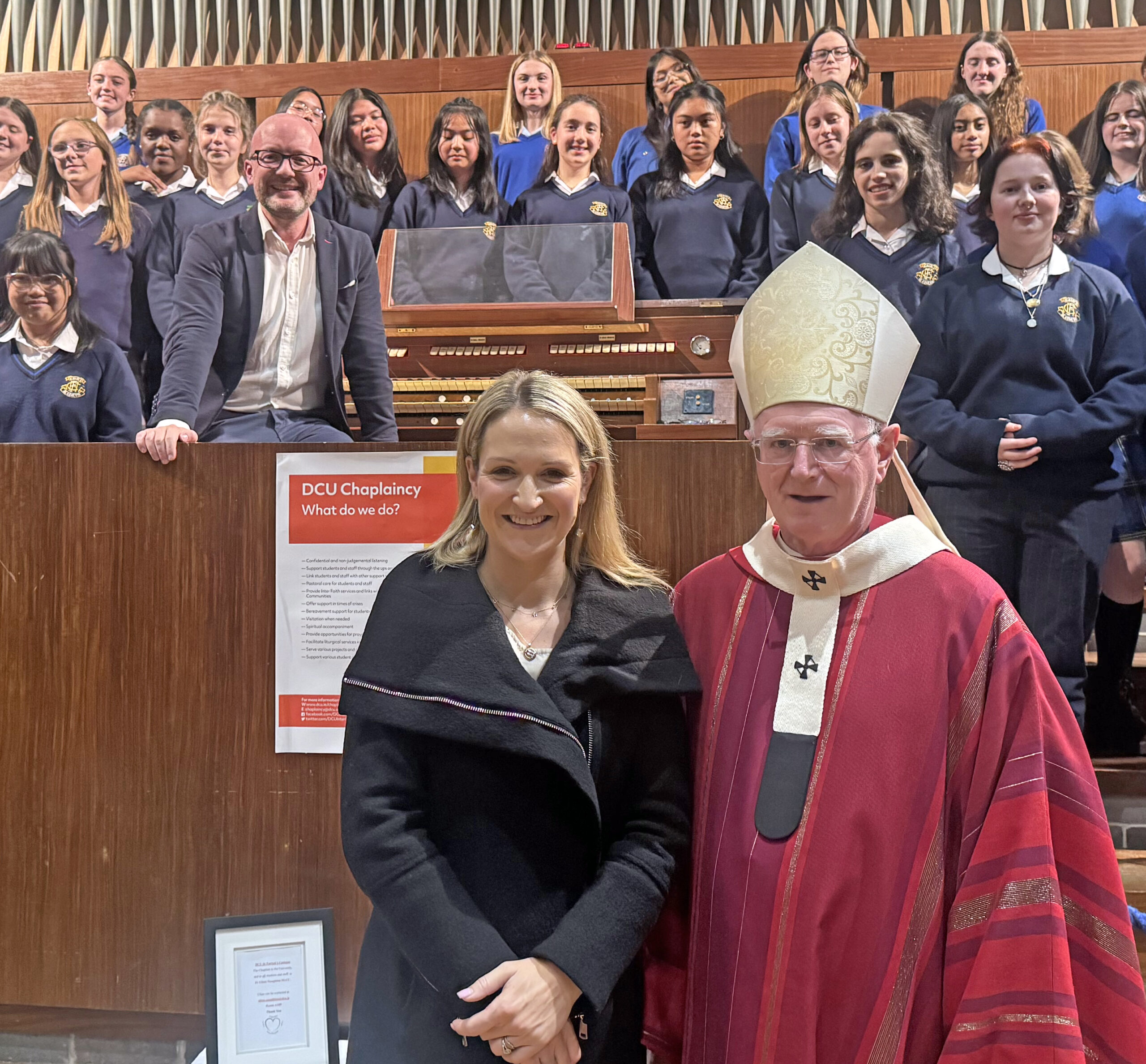
Archbishop Farrell with Education Minister Helen McEntee
I am very grateful to the Boards of Management of the mainstream schools, who established 71 new special education needs classes, and in particular the principals and staff. These schools will require the ongoing support of SNAs, and all the support services necessary for the educational welfare of the children. The work and dedication of the principals and staff in all of our special schools is be acknowledged. These special schools provide an educational service to children to meet the specific needs of the pupils attending the schools. I would ask the Ministers, the officials of the Department of Education and the National Council for Special Education, to assist these schools in the support they give to pupils and parents. It is vital that we address the needs of all children: both children within mainstream schools, and children in schools with a specific education designation, to help pupils reach their full potential.
Third, it is important to recognise that in order to be beacons of hope we need to be hopeful ourselves. We are not called to be happy-clappy day-in-day-out. “One cannot find hope without entering into a vulnerable, total, and exposed relationship.” To do that one has to leave abstractions behind and share the real experiences that allow us to know who we are and who the other is. (Jose Tolentino Mendonca, Avvenire, “Un Giubileo Dedicato Alla Speranza. Ma in Che Cosa Speriamo?”, December 24, 2024).
Fourth, be attentive to those around you, especially students or staff members’ who may be struggling. There is no place in a school for indifference.
Lastly, find time for prayer, reflection and discernment. Life-giving hope cannot be delivered by human effort alone; it is more than calculation and strategy; life-giving hope is rooted in our relationship with Christ, someone whose story was that of failure (see Pope Benedict XVI, Spe Salvi, 31).
Make the most of the opportunities we have this academic year to grow in knowledge, wisdom, faith hope and love.